First, there is the Mosman Bay setting beside the Swan River: we meet near the jetty at the bottom of the steps, beneath the branches of a well-pruned red pepper tree. There is a pine table, trestle benches. Here is your family: mother, two brothers, sister, their spouses, an aunty, cousins, all the grown-up children now in their late teens, early twenties. Your nephews, both sons of your youngest brother will climb the tree later, omniscient observers and, once spotted, your brother the sergeant shouts “Hey dickheads, come down”.
You baked a loaf of wholemeal bread and blended chickpeas for hummus. It is a thirty plus degree day and everyone who gathers has a hat. One nuclear group wear matching T-shirts printed with: Unless You are a [Surname], You Wouldn’t Understand. Our daughters arrive separately, so they can leave at a time of their own choosing.
There is momentary rupture, a skirmish with local contenders over place, rights of access, and an alleged council booking. Ousting is attempted. What, this bench? This spot? Are you joking? There is a steady back-and-forth volleying pitch to the exchange which extinguishes in the ambient heat scored by half humorous, half contemptuous expressions. We carry the weight of numbers. She seems well practised, though, and puts up a fight. We were here first. You can’t book this - it’s public space! There is falling back for parlez, low-key conferencing. The bush lawyer’s friends’ gesture. Invaders are seen off.
Your dad is here in a cardboard box. Having lived on Monument Street, growing up around here, he’d specified Monument Hill, but this was deemed too hot, problematic, inauspicious. It would be a five-minute drive. There is no park as such, just Leighton Battery. Here we have the river; from Monument Hill there is only a radial blue arc of the singular Indian Ocean. So, it is decided. His ashes pass from hand to hand on the jetty as your mother urges everyone to do their bit.
Your father is sprinkled in the river, among jellyfish blooms. And the grey residue sinks down, absorbed, settling out of sight.
*
Second, there is my mother’s stricken grief at dad’s undoing by dementia. Since Christmas day when he died, she has been muted, a silent screen performer, hollowed by the impetus of routine and excessive gestures.
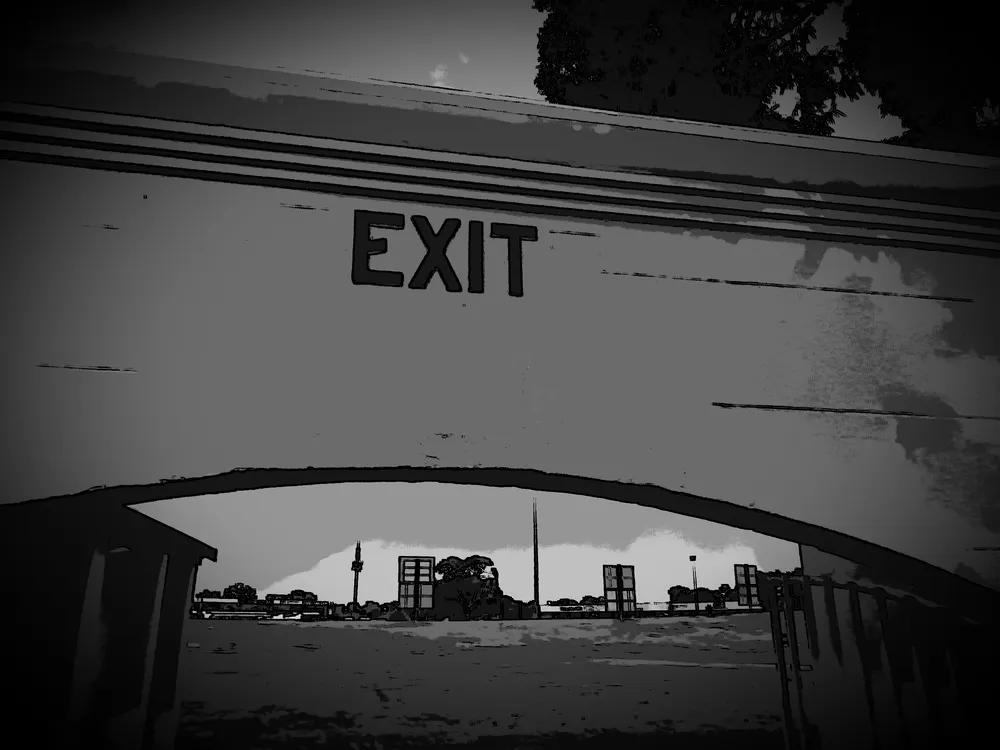
We arrive at the funeral home, and we are the only mourners. I have made recordings of his favourite songs, and a film for the soundtrack, but mum cannot hear or see, and will not sit among the empty rows of seats. Raised on its dais, this smooth blank coffin is a loaded void. Dad is with us in absentia. In person, he would have been uncomfortable at such social awkwardness. Straitened by a suit and tie, looking for a drink, wanting a cigarette, any exit, he would have snuck off, the dearly departed.
We speak our small words into this exhausting, rigid space. Mum cannot wait to leave. Later, without us, without explanation, she will return to pick up his ashes.
It is left to me and our daughters to carry dad aloft, like a cake in his cardboard box, down to the Swan River. On the shoreline at Ashfield flats where I last saw him on the cycleway standing beside his bike, a mistimed aim into headwind threw grit at our faces. Passing weekenders look away from this framed tableau.
In hindsight, I do not think he recognised me as his daughter back then when we met by chance while riding. He seemed confused, as he often did through the progression, an erasure, that is dementia. But I saw that he was momentarily free: out from under mum’s control of the house; away from its rituals, keys, permissions, and multiplying confusions. Dad had escaped himself.
*
Third, there is a man who now lives alone in a village in England opposite the local church, tucked away on a corner behind an Italian restaurant. He is 30 minutes by train from London, then another 15 minutes to drive from Leighton Buzzard train station. I could take you there using Google maps. We could stand on the road outside his house, or hover above streets like avenging angels.
His third wife is an irregular visitor, preferring the support of her own family while she undergoes hip replacement. He has also had surgery – both hips, and nose reconstruction following a work accident. When we meet, pre-COVID in 2019, I do not recognise this man who once had dark hair and wore glasses. He has three poodles.
This man is my biological father.
He took some tracking down after nearly 50 years’ silence, some unconfirmed sightings, but no contact in between. I had recurring dreams of being chased by a bearded biker. My aunty said he had been sighted visiting Shropshire. I wondered if he was dead. No. Found on FaceBook. A photo with his motorcycle was the giveaway. Confirmed by email. There was a confounding phone conversation as he recovered after surgery. A familiar northern English accent. He could not believe it was me, his daughter.
We fly from Perth after Qantas cancel the non-stop flight, and then transfer in Singapore. At Heathrow Airport, I meet my biological father’s son, my brother, who drives us to his houseboat on the Thames. Both estranged from our father, we have no shared context. Revelations are slow, like peeling skin from a dose of sunburn. We share meals. Together we walk through Richmond Park. He says: Expect nothing, accept everything.