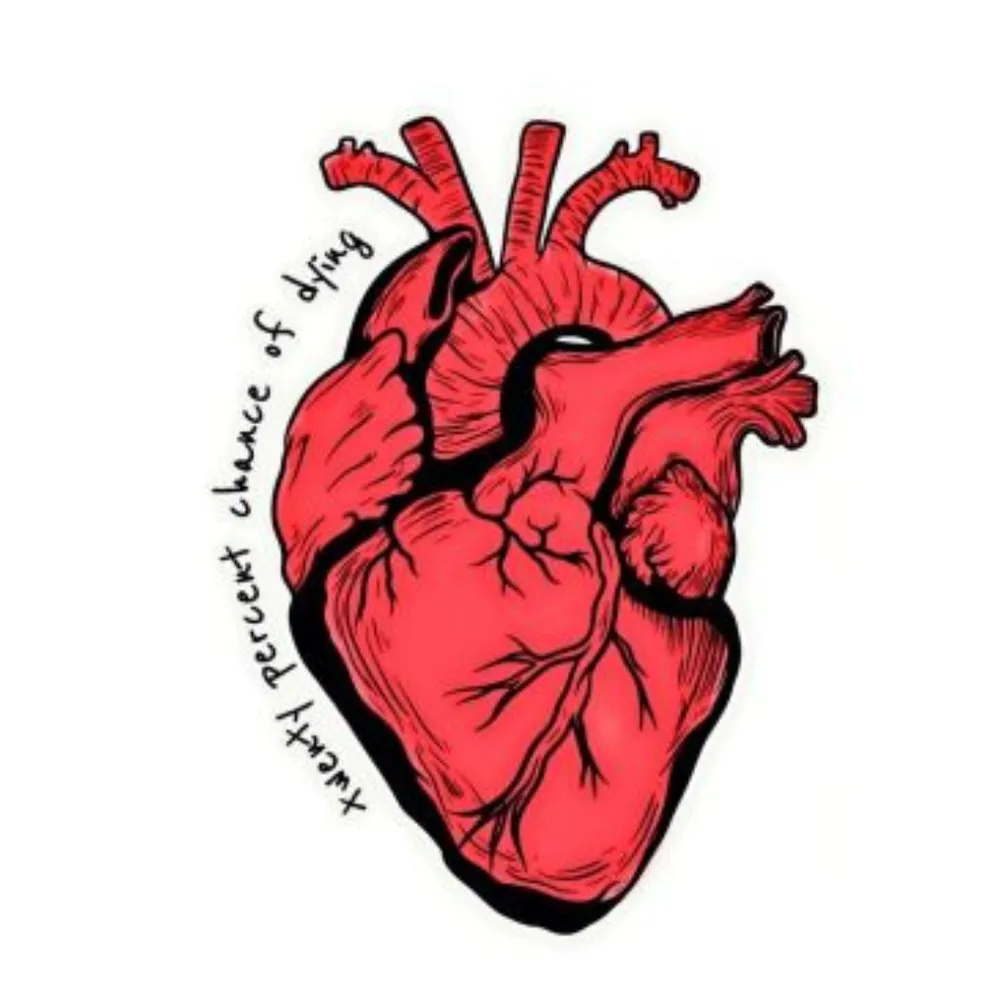
Numbers were never my specialty, they were unchanging and disgustingly constant. If you subtracted eight from ten you would always be left with two, no exceptions. Numbers bored me to death, they offered no amusement and I never paid them any heed unless my maths teacher drew them on a board and told me to answer the equation.
That had been until a particular visit to the hospital.
No sane person should ever be a fan of the sanitary white walls or antiseptic scent that overpowered all other senses. But I had always enjoyed my visits. It was entertaining to watch my parents’ eyebrows crinkle in concern as they listened to every word the doctors say and every time, relieved by the lack of issues, they’d buy me iced chocolate and we’d eat lunch together. I used to zone out as the doctors drone on and on about hearts and arteries and pulses but that day I decided to pay attention to what should’ve been another report of how I was doing wonderful, of how I was in the pink of health.
Instead the doctor, smiling as if he were casually reciting a paragraph in one of his medical textbooks, told me I would need surgery to repair my heart from a bacterial infection that had occurred two years back. I laughed, and when my father asked me if I was okay, I laughed again. I chuckled on the way home, humming to the radio, I giggled when my mother unlocked the door and smiled when Taylor Swift played on my phone.
I was anxious to go for surgery but I was petrified for what it meant for my parents. My mother’s eyes were bruised from the restless nights and I noticed my father’s frown every time he thought I was not looking. They joked that they may not be able to afford it without drowning in debt. But it was apparent that they had long decided I would have this surgery, that it would not matter if there was a small chance I would not make it, that my mother would have to skip work for a few weeks just to care for me, that my father would have to guide me through physiotherapy as I learned to breathe. A child, I would be reduced to a child.
The doctor said the success rate of this procedure was eighty percent, a safe bet. But I started praying for the twenty percent chance of dying, for there to be complications, for my parents to finally be rid of their sickly child. I relished the thought, I wished for it every night, when the clock ticked past midnight, when my parents were fast asleep. No child of thirteen should have to hope for such dark things, but I did.
And sometimes, when the days were most rough and tears had run out, I grabbed a pair of scissors from my study table. I remembered when I bought this particular one, a few years back, I had gone grocery shopping with my mother, though I cannot recall where. She glanced at the price and wordlessly nodded. I grinned and tossed it into the cart, grateful for the rare event that my mother let me buy something not entirely necessary. I wondered if she would remember it too, I wondered if she would regret it.
I stared at the blade, and though it would be vaguely satisfying, to end it right then, I returned it to its drawer, whispering comforting words into the darkness of my room and tucked myself to sleep. There would be no use, I’d die on the table anyway, and that would be an ending my parents would be prepared for, even in part. It would be the ending that caused the least grief.
There was no clock but it was in the middle of the night when I roused from my drug-induced sleep after the surgery. Pain, in my arm, in my chest, in my head. I struggled to breathe, I couldn’t move, I didn’t see my parents. Then, darkness once again but not the previous thoughtless oblivion, this time it was filled with the cold wave of realisation; that I did not die.
For a year, I lived in a state of regret, of ponder. I stared at every pitiful gaze my friends casted me and imagined who would’ve attended the funeral, who would’ve cried, who would’ve cared. And most times I contemplated if it was too late to fulfil my earlier intentions.
The consuming thoughts increased in volume every time my mother had to assist me everywhere I go, every time it hurts to lift my arm and write. It was debasing, that I had been independent and now I was anything but, dependent on everything and everyone. I had been correct, I was reduced to a babe. And I sobbed like one though my cries were quiet, careful to never alert my parents. They had enough to worry about.
I don’t think I had ever truly recovered, these imaginings plaguing me every moment, whether awake or in my dreams. It is a burden I carry, a desire I secretly harbour, even all these years. I never ache to reach for my scissors anymore, nor do I deliberate how life would be if I were dead. But I do, sometimes wish I had died on that table, back on 19th November 2020.